What this guide helps you decide.
- Ubud Art Market is best for souvenirs, textiles, rattan bags, wood carvings, small decor, art, silver-style jewelry, and easy Bali gifts.
- Morning is calmer for browsing, while evening can feel atmospheric after dinner or a dance show.
- Cash and small denominations make shopping easier, even though some larger shops may accept cards.
- Bargaining is normal, but it works best when done politely, with a smile and realistic expectations.
Ubud Art Market, locally known as Pasar Seni Ubud, is one of Bali's most popular places to shop for souvenirs, textiles, crafts, jewelry, paintings, and small gifts. It sits right in central Ubud, next to Ubud Palace, which makes it easy to combine with a relaxed walking route.
The market is fun, colorful, and full of possibility. But for first-time visitors, it can also feel intense: many stalls, repeated products, flexible prices, and a lot of choice in a small area.
This guide helps you shop smarter before or during an Ubud Full Day Cultural Tour, so you know what to look for, how to check quality, and how to bargain politely.
What is Ubud Art Market?
Ubud Market has two personalities. In the early morning, the traditional side serves local shoppers with fresh produce, spices, snacks, offerings, and daily goods. Later in the day, the tourist-facing art market becomes the main attraction for travelers.
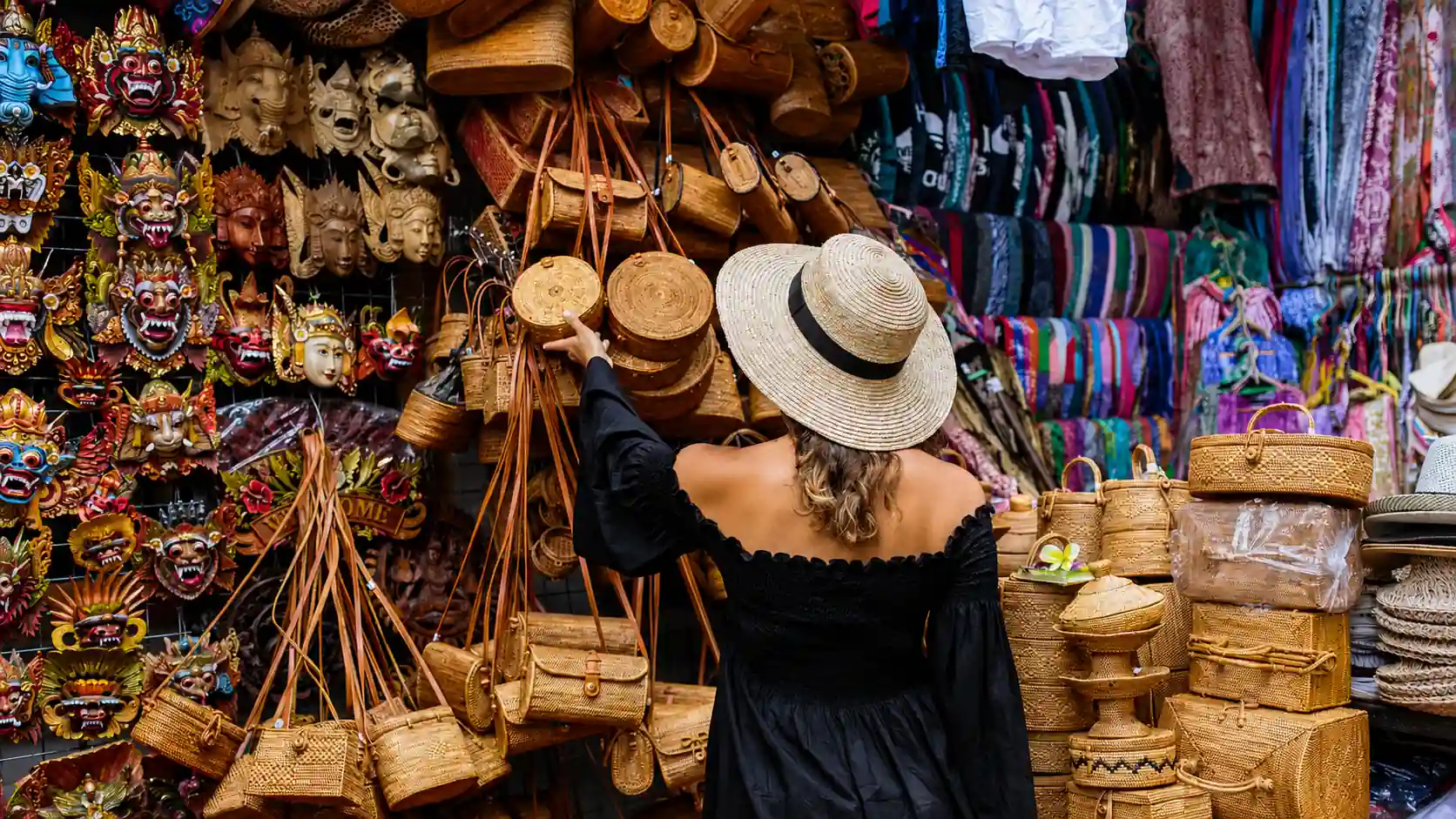
The art market is where you will find the souvenirs and handicrafts most visitors imagine: sarongs, rattan bags, wooden masks, paintings, dreamcatchers, jewelry, dresses, baskets, and Bali-style home decor.
| Market section | What to expect |
|---|---|
| Traditional Market | Early morning local shopping, produce, spices, snacks, and daily goods |
| Art Market | All-day souvenir shopping, handicrafts, textiles, clothing, paintings, jewelry, and gifts |

Best things to buy at Ubud Art Market
The best items are usually lightweight enough to pack, locally styled enough to feel like Bali, and useful enough that they will not sit forgotten in a drawer. Some products are handmade, some are factory-made, and many sit somewhere in between, so quality checking matters.
Balinese handicrafts and wood carvings
Look for wooden masks, carved statues, decorative panels, small animals, Hindu-inspired figures, and dance-style ornaments. Ask whether the piece is handmade if authenticity matters to you.
Silver and jewelry
You can find earrings, necklaces, bracelets, rings, and Bali-inspired designs. For higher-value silver pieces, inspect carefully and buy from a shop that feels more established.
Paintings and artwork
Expect traditional Balinese scenes, Kamasan-style inspiration, modern abstracts, prints, and small original works. Rollable pieces are easier to pack than framed art.
Clothing and textiles
Sarongs, scarves, batik-style fabrics, ikat-inspired textiles, summer dresses, beachwear, and boho tops are some of the most practical Ubud Market purchases.
Home decor and accessories
Rattan bags, woven baskets, placemats, bamboo lamps, lanterns, dreamcatchers, stone pieces, and small decor items are common and photogenic.
Spa products, snacks, and spices
Natural soaps, essential oils, massage oils, herbal teas, jamu ingredients, Balinese coffee, vanilla, banana chips, coconut cookies, and spices make easy gifts.


How to bargain without feeling awkward
Bargaining is part of the market experience, but it should not feel aggressive. The best approach is friendly, calm, and respectful. If the price does not work for you, smile, say thank you, and walk away politely.
A common starting point is around 40-60% of the first asking price, then move toward a fair middle. If the item is clearly higher quality, handmade, or from a smaller artisan-style stall, do not push unrealistically low.
- Smile first, bargain second
- Ask the price, then offer calmly
- Buy multiple items from one stall if you want a better bundle price
- Do not bargain hard if you are not actually willing to buy
- Keep small cash ready so payment is quick
Quality checks before you buy
Because Ubud Market has many vendors and many versions of similar products, take a minute to inspect before paying. Small checks can prevent disappointment later.
| Item | What to check |
|---|---|
| Wood carvings | Weight, carving detail, cracks, paint finish, and whether it feels handmade |
| Textiles | Loose threads, stains, fabric feel, color bleeding, and stitching quality |
| Rattan bags | Handle strength, lining, zipper, weaving tightness, and shape |
| Jewelry | Clasps, sharp edges, discoloration, and whether it is plated or silver |
| Paintings | Canvas quality, signature, paint texture, rollability, and packing protection |
| Snacks and spices | Expiry date, sealed packaging, and whether customs rules allow it in your country |
Best time to visit Ubud Market
Morning is usually better if you want a fresher atmosphere, easier walking, and fewer people. The 8-10 AM window works well if you are already staying in Ubud or starting a central Ubud route.
Evening can also be pleasant because central Ubud feels lively, restaurants are open, and the market area is easy to combine with Ubud Palace or Saraswati Temple.
- Go in the morning for calmer browsing and softer heat
- Go after 6 PM if you want an easy pre-dinner or post-dinner walk
- Avoid rushing if you plan to compare prices across several stalls
- Bring a small foldable tote bag for purchases

What to combine with Ubud Art Market
The market is best as part of a half-day or full-day Ubud plan. On its own, it can feel intense. Combined with nearby culture, food, and walking time, it becomes much more enjoyable.
Ubud Palace
Right beside the market. Good for a quick culture stop and an easy reference point in central Ubud.
Pura Taman Saraswati
A beautiful temple with lotus ponds, close enough to combine before lunch, coffee, or market browsing.
Traditional dance performance
If you stay in the area until evening, Ubud has several dance venues with nightly or weekly schedules.
Monkey Forest or Campuhan Ridge Walk
Good afternoon additions if you want nature and walking after shopping.
.webp)
Suggested half-day Ubud shopping route
If shopping is part of your Ubud day, keep the route simple. The mistake is trying to shop, visit too many temples, chase waterfalls, and cross town all in one short window.
| Time | Plan |
|---|---|
| Morning | Browse Ubud Art Market and the traditional market area |
| Late morning | Walk to Ubud Palace and Saraswati Temple |
| Lunch | Choose a nearby warung, cafe, or rice-field-view restaurant |
| Afternoon | Continue to Monkey Forest, Campuhan Ridge Walk, or an Ubud countryside stop |
| Evening | Watch a traditional dance performance if you stay in central Ubud |
Final shopping advice
Ubud Art Market is not only about buying things. It is part of the central Ubud experience: colors, textures, conversation, bargaining, and little discoveries between temples, cafes, and local streets.
Go with a loose list, not a rigid mission. Know your budget, check quality, bargain kindly, and leave room for one or two unexpected finds. That is usually where the best souvenir story comes from.
- Best easy gifts: sarongs, rattan bags, small carvings, soaps, coffee, snacks, and scarves
- Best meaningful buys: handmade wood pieces, original art, silver jewelry, and textiles
- Best practical rule: if you love it and the price feels fair, buy it; you may not find the exact same piece again
Frequently asked questions
Ubud Art Market is best known for Bali souvenirs, handicrafts, textiles, rattan bags, wood carvings, paintings, jewelry, clothing, and small home decor items.
Yes, bargaining is normal at many stalls. Start politely around 40-60% of the asking price and move toward a fair middle if you genuinely want to buy.
Morning around 8-10 AM is usually calmer and cooler. Evening after 6 PM can also be pleasant if you want to combine shopping with dinner or a dance performance.
Some larger shops may accept cards, but cash is still the easiest option. Bring small denominations such as IDR 10,000, 20,000, and 50,000 notes.
Yes, especially if you enjoy browsing local-style souvenirs and want an easy central Ubud stop near Ubud Palace and Saraswati Temple.