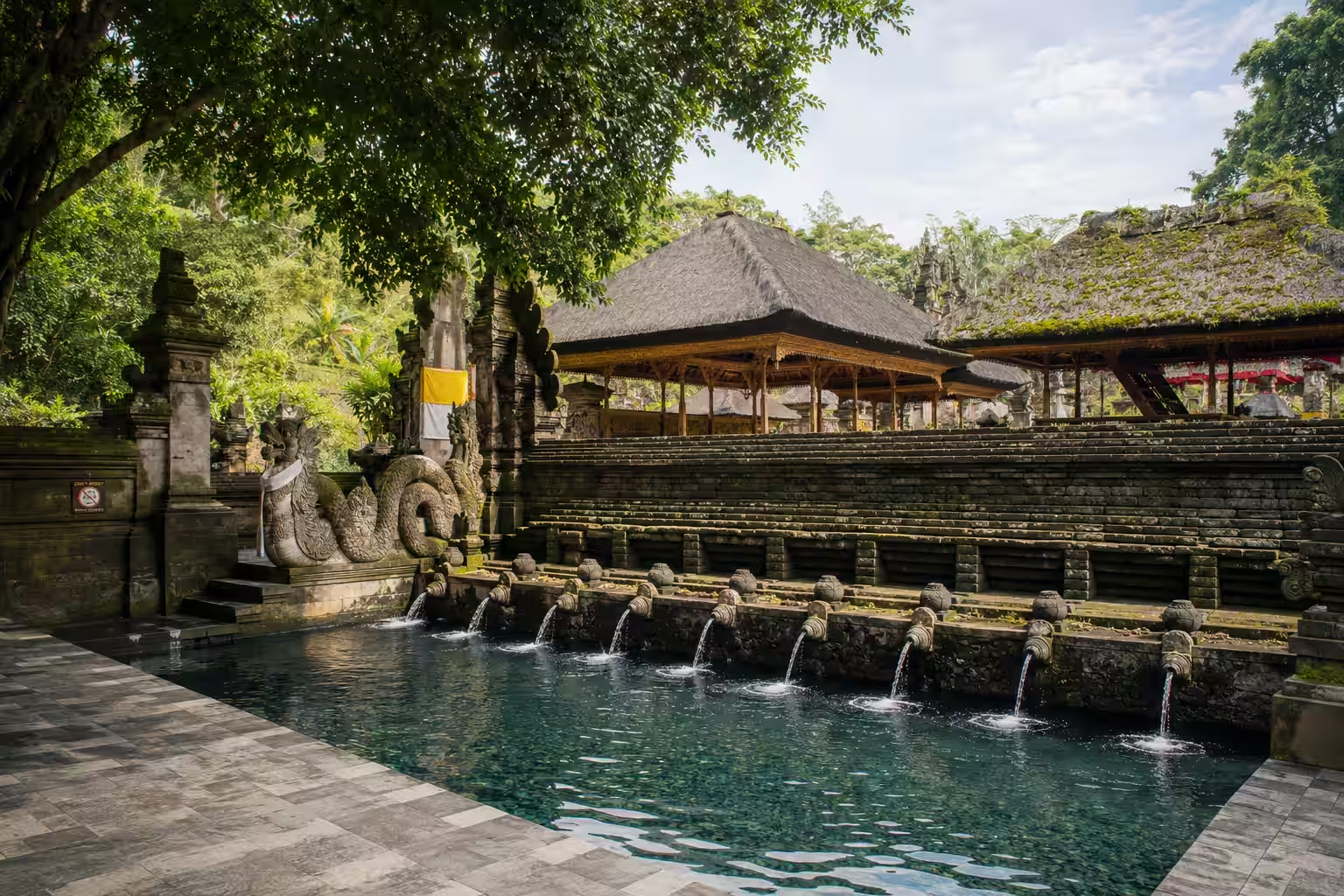
What this guide helps you decide.
- Tirta Empul is an active Balinese Hindu water temple in Manukaya, Tampaksiring, around 30-40 minutes from central Ubud.
- Published visitor rates are IDR 75,000 for adults and IDR 50,000 for children aged 5-12; confirm the current price before or upon arrival.
- A standard temple sarong is available at the entrance, while a separate bathing sarong can be rented on site for entering the purification pools.
- First-time visitors doing melukat should ask temple staff or use a knowledgeable local guide to follow the correct sequence and avoid restricted spouts.
- Arriving near opening time offers cooler weather, softer light and a calmer visit before larger tour groups arrive.
Tirta Empul is one of those Bali temples everyone has seen in a photo before they have actually been: rows of stone spouts, people in sarongs bowing under running water, and the image that appears across Bali travel accounts.
What the photos rarely explain is that this is not a staged attraction. Balinese families still come here to pray and purify themselves, while visitors share the same sacred complex.
This guide covers what the temple is, the current published fees, how melukat works, where to rent the correct sarong, and how to visit from Ubud without treating a working temple like a photo set.
What is Tirta Empul Temple?
Tirta Empul sits in Tampaksiring, Gianyar Regency. The temple is more than 1,000 years old and is generally dated to the 10th century during Bali's Warmadewa dynasty.
Its name is commonly translated as holy spring. That is unusually literal for a temple name: the complex was built around a natural spring that still feeds its pools and water spouts today.
Balinese mythology connects the spring to the god Indra and the tyrant king Mayadenawa. In the story, Mayadenawa poisoned the local water supply, and Indra struck the ground to create healing water for his army. That link between water, restoration and the victory of good over evil remains part of the temple's meaning.
The complex follows the traditional three-courtyard structure of a Balinese temple: the outer courtyard, middle courtyard and inner sacred area. The spring, prayer spaces and purification pools are parts of a larger religious site, not separate photo attractions.

Where is Tirta Empul and how do you get there from Ubud?
Tirta Empul is in Manukaya village, part of Tampaksiring district, around 15 kilometres north of central Ubud. The drive usually takes 30-40 minutes, although Ubud traffic can stretch that estimate.
The route becomes noticeably more rural as you leave town, with villages, temple compounds and rice-growing areas replacing the denser streets around central Ubud.
Ride-hailing availability can become less reliable around Tampaksiring, especially for the return journey. Arrange a return driver before entering the temple or include it in a wider Central Bali route.
A private Ubud day tour is the easier option when you want to combine Tirta Empul with other stops without negotiating transport between each place.
Private driver
Best when Tirta Empul is part of a full day around Tampaksiring, Tegallalang or Ubud.
Scooter
Practical only for experienced, licensed riders who are comfortable with Bali traffic and changing weather.
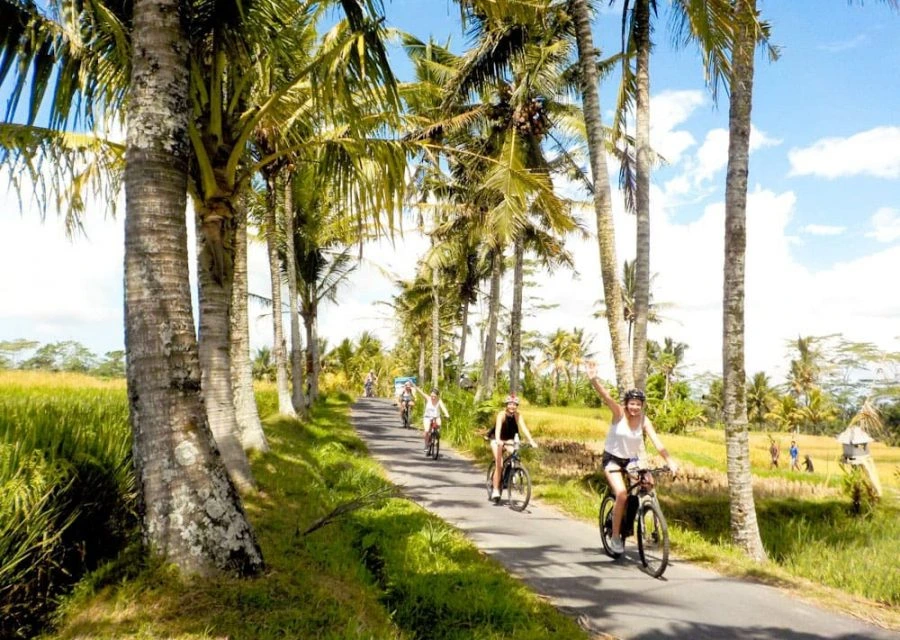
eBike route
A more active option for capable cyclists who want the countryside journey to be part of the experience.
Tirta Empul entrance fee and opening hours
At the time this guide was updated, the commonly published admission rate was IDR 75,000 for adults and IDR 50,000 for children aged 5-12. Children under 5 are commonly admitted free.
The temple is commonly listed as open daily from 08:00 to 18:00, including many public holidays. Religious ceremonies can affect access to individual areas even when the complex remains open.
General tickets are normally purchased at the entrance. Prices, opening times and access rules can change, so treat the figures below as planning information and confirm the current details upon arrival.
| Visitor information | Current planning detail |
|---|---|
| Adult admission | IDR 75,000 |
| Child admission | IDR 50,000 for ages 5-12 |
| Children under 5 | Commonly free |
| Opening hours | Commonly 08:00-18:00 daily |
| General visit | Allow 45-60 minutes |
| Visit with melukat | Allow about 90 minutes or longer |
Sarong rental at Tirta Empul: which one do you need?
Yes, sarongs are available at Tirta Empul. The confusing part is that visitors may need two different sarongs depending on what they plan to do.
For walking through the temple grounds, a standard dry temple sarong is available at the entrance and must be worn according to the current visitor rules. This garment is for respectful entry into the complex.
If you plan to enter the purification pools, rent a separate bathing sarong on site. Do not take the standard entrance sarong into the water. Changing areas and lockers are also available around the purification area, with charges handled separately.
Rental prices can change, so check the displayed rate or ask staff before changing. Bringing a towel and dry clothes remains your responsibility.
Sightseeing only
Use the standard temple sarong available at the entrance and keep it dry.
Joining melukat
Rent the designated bathing sarong on site, then change back into dry clothing afterward.


How the melukat purification ritual works
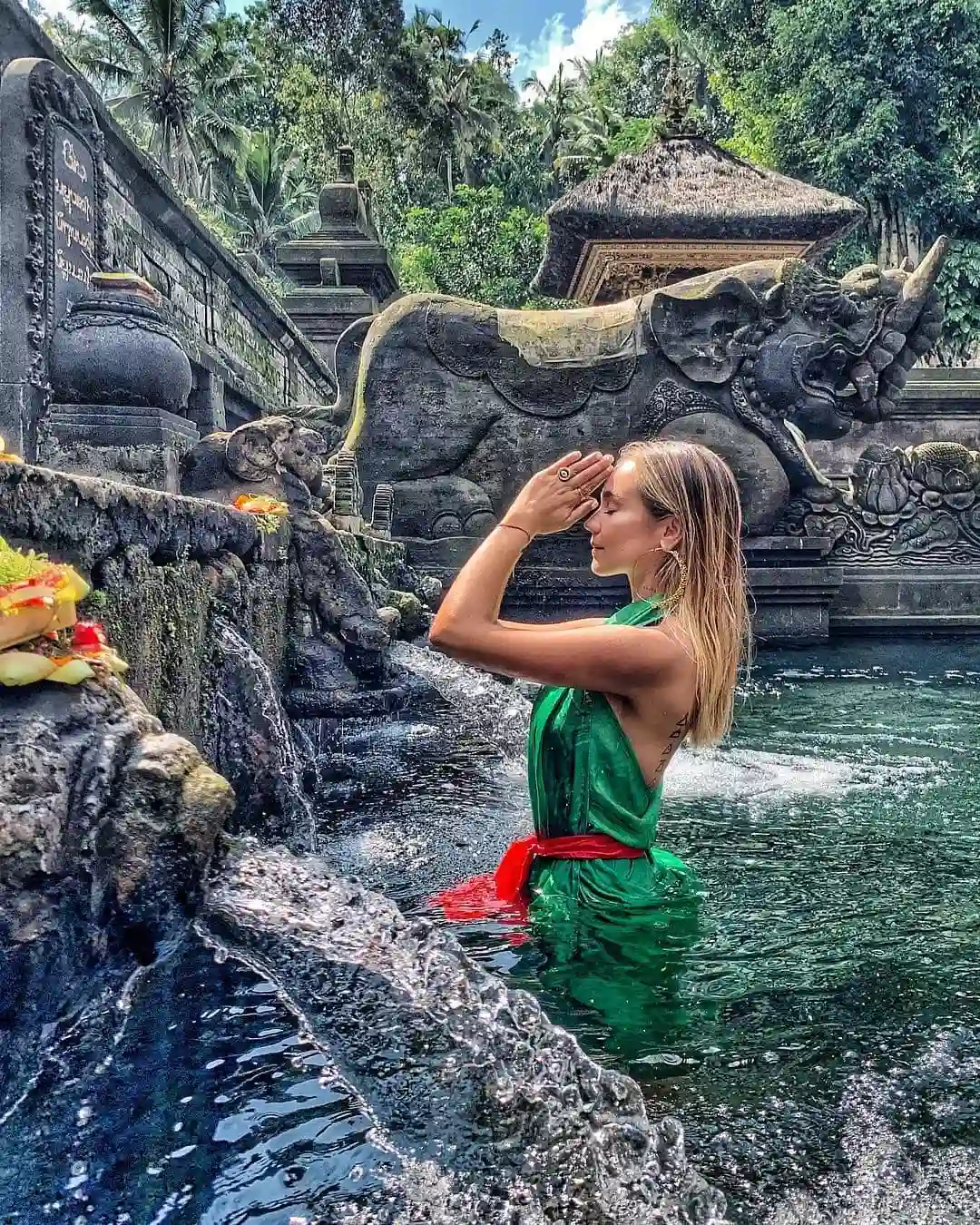
Melukat is a Balinese Hindu purification ritual. People come with different intentions, including spiritual cleansing, prayer, emotional renewal or preparation for an important life event.
At Tirta Empul, the visible part of the ritual takes place beneath a sequence of water spouts. It is not simply a matter of entering the pool and moving beneath every stream.
Some spouts have specific ceremonial purposes, including spouts associated with rites for the dead. First-time visitors should ask temple staff or use a knowledgeable local guide so they follow the appropriate sequence and understand what they are doing.
1. Prepare respectfully
Change into the designated bathing sarong, secure your belongings and follow current temple instructions.
2. Make an offering and pray
The ritual normally begins with prayer and an offering rather than at the water spouts.
3. Enter the pool
Move calmly through the approved sequence and allow worshippers space around each spout.
4. Purify beneath the water
Pause, pray and immerse according to the guidance you have been given.
5. Change and continue
Dry off, change into appropriate temple clothing and continue through the complex respectfully.

Do you need a guide for melukat?
A private guide is not universally required simply to enter Tirta Empul or to rent a bathing sarong. However, guidance is strongly recommended for first-time international visitors who want to participate rather than only observe.
A good guide explains the prayer sequence, helps arrange an appropriate offering, identifies which water spouts to use, and keeps the experience from becoming guesswork.
If you visit independently, speak with official temple staff before entering the water. Do not copy another visitor's movements and assume the ritual is identical for everyone.
What to wear and bring
Cover your shoulders and knees before entering. Even though a sarong is available, arriving in modest clothing makes changing and walking around the complex easier.
If you are doing melukat, wear practical clothing beneath the bathing sarong and bring a complete dry change for afterward.
- Modest top covering the shoulders
- Dry change of clothes
- Towel
- Waterproof phone pouch or small dry bag
- Small cash for rentals, lockers and offerings
- Water to drink after the visit
- Sandals or footwear that is easy to remove
- Sun protection for the exposed parts of the complex
Temple etiquette that matters
Tirta Empul receives many visitors, but its religious function comes first. Signs and temple staff take priority over anything written in an online guide.
Balinese Hindu custom and temple notices ask menstruating visitors not to enter sacred temple areas or participate in purification. Follow the current rules displayed at the entrance and ask staff respectfully if you are unsure.
The spring water is sacred but is not treated drinking water. Do not drink directly from the pools or spouts.
- Speak quietly around prayer areas
- Do not step over offerings
- Do not sit or stand higher than a priest conducting a ceremony
- Never enter a closed or worship-only area for a photograph
- Keep pathways and water spouts clear for worshippers
- Follow photography signs and avoid intrusive close-ups
- Do not touch shrines, statues or ceremonial objects
Best time to visit and how long to stay
Go early. An arrival around opening time gives you cooler air and a calmer view of the pools before larger tour groups arrive.
Allow 45-60 minutes for a respectful sightseeing visit. If you plan to do melukat, allow at least 90 minutes for changing, prayer, the water sequence and getting dry afterward.
Ceremony days can make the temple busier, but they can also reveal its living religious role. Give worshippers priority and expect access to change without notice.


What can you combine with Tirta Empul?
Tirta Empul works best as part of a focused Tampaksiring and Ubud day rather than a rushed list of distant attractions.
Gunung Kawi is nearby and adds an archaeological landscape of rock-cut shrines, river steps and a very different physical setting. Tegallalang Rice Terrace can fit on the return toward Ubud, although traffic and crowds should shape the order.
Travelers who prefer a slower countryside experience can compare the Tirta Empul route on our Ubud eBike Tour.
For more planning ideas, see our guides to the best places to visit in Ubud and why Ubud makes a practical Bali base.
Gunung Kawi
Nearby rock-cut shrines reached by a stepped valley walk.
Tegallalang
Rice-terrace scenery that fits naturally on the route back toward Ubud.
Ubud
Finish with the market, palace, dinner or an evening dance performance.
Is Tirta Empul worth visiting?
Yes, when you visit it as a living temple rather than only a famous Bali photo location.
The site brings together more than 1,000 years of history, natural spring water, Balinese Hindu practice and a landscape that remains actively used by local families.
A general visit is enough if you want to understand the temple without entering the water. Choose melukat only when you are willing to follow the ritual respectfully, rent the correct sarong and take guidance instead of improvising.
Frequently asked questions
Tirta Empul is commonly translated as holy spring. The temple complex was built around a natural spring that feeds its sacred pools and water spouts.
The commonly published visitor rate at the time of this update is IDR 75,000 for adults and IDR 50,000 for children aged 5-12, with children under 5 commonly admitted free. Confirm the current price upon arrival.
The temple is commonly listed as open daily from 08:00 to 18:00. Ceremonies or operational changes may affect access to individual areas.
Yes. A standard sarong is available for entering the temple grounds. If you plan to join melukat, rent the separate bathing sarong available on site and keep the entrance sarong dry.
General admission covers access to the temple complex. A bathing sarong, locker, offerings and guide assistance are separate arrangements when required.
A private guide is not universally mandatory, but guidance is strongly recommended for a first visit. Ask official temple staff or use a knowledgeable local guide so you follow the correct prayer sequence and avoid restricted spouts.
The temple is around 15 kilometres north of central Ubud. Driving commonly takes 30-40 minutes depending on traffic and your starting point.
Allow 45-60 minutes for sightseeing, or at least 90 minutes when changing clothes and participating in melukat.
Balinese Hindu custom and temple notices ask menstruating visitors not to enter sacred temple areas or participate in purification. Follow the current signs and staff guidance.
Children can visit with close adult supervision. Keep them quiet around ceremonies, away from offerings and safe around wet stone surfaces and crowded pools.
.webp)
