What this guide helps you decide.
- Tours normally leave around sunrise, often close to 5:30 a.m., but the confirmed time depends on the operator and conditions.
- Dolphins are wild, so sightings, species, numbers, distance, and behaviour cannot be guaranteed.
- Staying in Lovina the night before is normally more comfortable than a pre-dawn drive from Ubud or South Bali.
- Choose a captain who slows down, avoids chasing or surrounding dolphins, and leaves the animals a clear route away.
- Boat-only viewing normally does not require swimming, but passengers should still confirm safety equipment and suitability before booking.
A Lovina dolphin tour begins before most of Bali is awake.
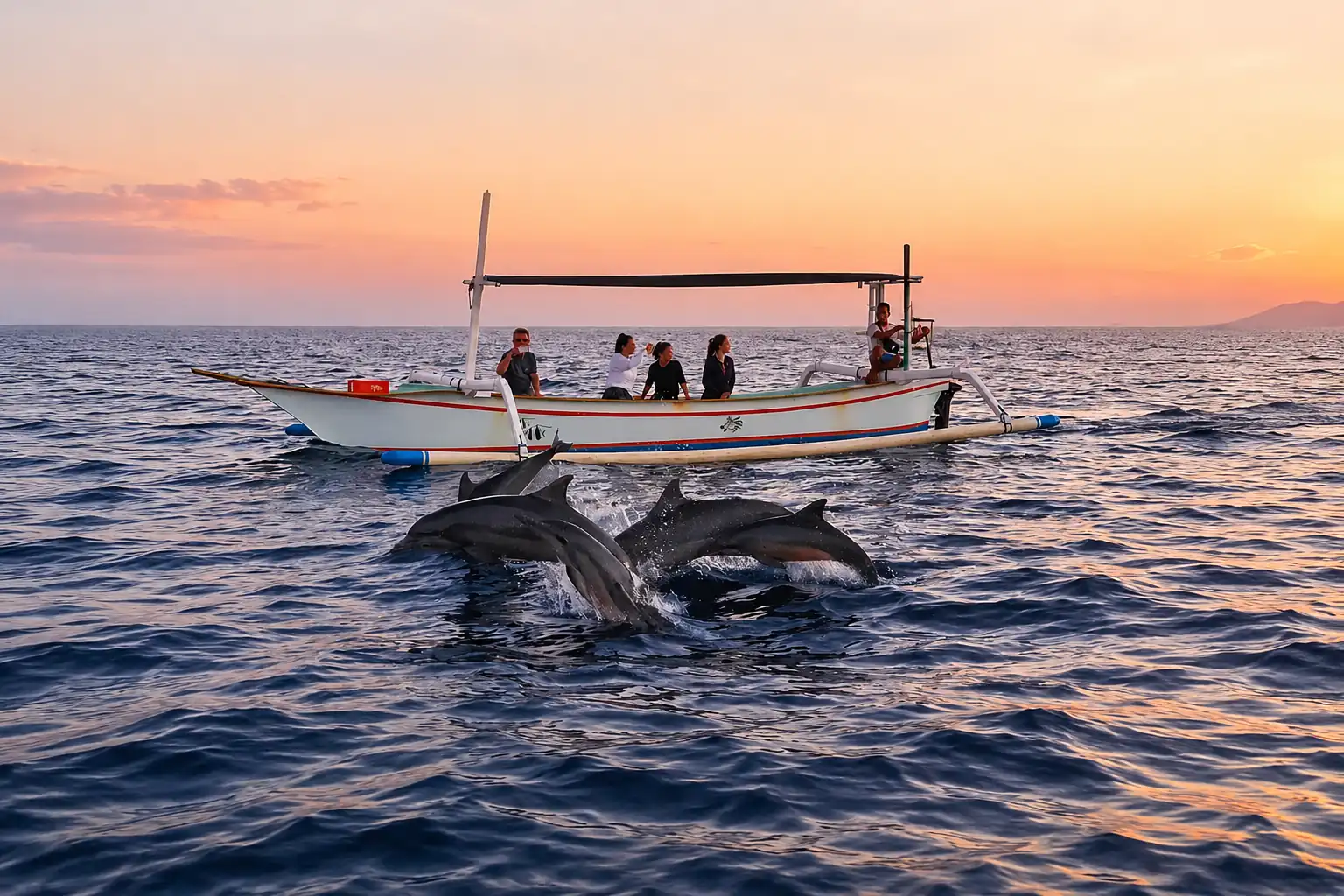
Traditional boats leave the dark shoreline, the mountains slowly appear behind North Bali, and the sky begins changing colour over the Bali Sea. Once offshore, the captain looks for movement on the surface - dorsal fins, splashes, or a group of dolphins travelling through the water.
It is one of Bali's most recognisable wildlife activities, but it should be approached with realistic expectations. The dolphins are wild. They do not follow a performance schedule, sightings cannot be guaranteed, and the quality of the experience depends heavily on weather, sea conditions, boat traffic, and how responsibly the operator approaches the animals.
A Lovina dolphin tour is an early-morning boat trip in North Bali that combines sunrise with the opportunity to observe wild dolphins in their natural marine environment. Lovina is located on Bali's northern coast in Buleleng Regency, around 10 kilometres west of Singaraja. The area is known for its dark volcanic sand, quieter coastal atmosphere, and morning dolphin-watching trips using local boats.
Lovina dolphin tour at a glance
Official tourism information describes Lovina tours as early-morning excursions, commonly beginning around 5:30 a.m. and using traditional local boats to reach the offshore viewing area. Exact meeting and departure times depend on the operator and conditions on the day.
| Tour detail | What to expect |
|---|---|
| Location | Lovina, Buleleng, North Bali |
| Main activity | Watching wild dolphins from a boat |
| Departure period | Early morning, around sunrise |
| Boat type | Commonly a traditional outrigger boat |
| Wildlife | Wild dolphins; sightings are not guaranteed |
| Suitable for | Couples, families, photographers and nature lovers |
| Sea conditions | Vary according to weather, wind and waves |
| Swimming ability | Usually not required for boat-only viewing |
| Best preparation | Stay in Lovina or prepare for a very early departure |
| Responsible choice | Select an operator that avoids chasing or crowding dolphins |
Where is Lovina?
Lovina is a coastal tourism area in Buleleng Regency on the northern side of Bali.
Kalibukbuk is one of the main areas associated with Lovina Beach, although the wider Lovina coastline includes several neighbouring coastal communities. The atmosphere is noticeably different from the busier tourism centres of Kuta, Seminyak, and Canggu.
Buleleng's official tourism platform identifies dolphin watching, snorkeling, and diving among the activities associated with the Lovina area.
Because Lovina is in North Bali, reaching it from South Bali or Ubud requires a pre-dawn road journey. In practice, spending the previous night in Lovina is usually the more comfortable option when dolphin watching is your main reason for visiting.
- Dark volcanic-sand beaches
- A quieter coastal setting
- Sunrise boat trips and wild dolphin watching
- Snorkeling and diving excursions
- Access to North Bali waterfalls, temples, and hot springs
What happens during a Lovina dolphin tour?
The precise arrangement differs between operators, but most tours follow a similar sequence.
1. Early-morning meeting or hotel pickup
Your day begins very early. Travelers staying in Lovina normally meet at the beach or receive a nearby hotel pickup. Guests travelling from another part of Bali need to leave much earlier so they can reach the coast before the boat departs.
Confirm the pickup or meeting time, exact map location, captain or operator contact, whether transport is included, what happens if the sea is unsuitable, and whether the boat is private or shared. Do not assume that hotel pickup covers every part of Bali.
2. Arriving at Lovina Beach
When you reach the beach, it may still be dark. The captain or local team will normally confirm the booking and direct you to the boat. Depending on the departure point, you may need to walk across sand or shallow water when boarding.
Wear footwear that is easy to remove and clothing that can tolerate a small amount of sea spray.
3. Boarding a traditional boat
Lovina dolphin tours commonly use traditional outrigger boats, locally known as jukung. These are narrow boats supported by outriggers on either side for stability. North Bali's official tourism information describes dolphin excursions using traditional vessels as well as some more modern boat options.
Space may be limited, so avoid carrying a large backpack. Remain seated when instructed and keep your belongings secure. Sudden movement can affect balance, particularly while boarding or when the boat changes direction.
4. Watching sunrise from the water
The journey offshore is part of the attraction. As the boat leaves the beach, the sky begins to brighten over the Bali Sea. On a clear morning, you may see colour developing above the horizon while North Bali's coastline and mountain landscape remain behind you.
Cloud cover can affect the sunrise, but even an overcast morning may still produce soft light and a peaceful view from the water.

5. Searching for wild dolphins
The captain navigates toward areas where dolphins have recently been active. Local captains rely on knowledge of the water, experience, visual signs, and communication with other boats. There is no fixed point where dolphins wait every morning.
Some encounters last only a few moments. Others allow repeated sightings as dolphins move through the area.
- Fins breaking the surface
- Dolphins travelling together
- Quick changes in direction
- Animals surfacing briefly to breathe
- Occasional jumps
- Groups appearing and disappearing between boats

6. Observing from the boat
Once dolphins are located, the boat should slow down and allow the animals space. This is wildlife observation, not a staged show.
The most respectful encounter is one where the dolphins are free to continue travelling, feeding, resting, or socialising without being blocked or surrounded. Avoid pressuring the captain to move closer, chase a pod, or compete with another boat for the best position.
7. Returning to the beach
After the viewing period, the boat returns to the Lovina coastline. Some packages finish after dolphin watching, while others may include snorkeling, swimming away from the dolphins, breakfast, a North Bali sightseeing itinerary, or hotel transport.
These additions vary. Only expect them when they are clearly included in your selected package.
What dolphins can you see, and are sightings guaranteed?
What kind of dolphins can you see in Lovina?
Lovina is associated with several dolphin species, while research on local dolphin-watching tourism has particularly discussed spinner dolphins in the area.
Identifying a species from a moving boat can be difficult, especially when animals surface quickly or remain at a distance. Rather than promising one specific species, a responsible tour description should simply explain that visitors are observing wild dolphins found in the waters off North Bali.
- Operators should not guarantee a particular species
- They should not promise a certain number of dolphins
- Jumping behaviour and close approaches cannot be promised
- Underwater visibility and encounter duration can change
Are dolphin sightings guaranteed?
No. Dolphin sightings should never be guaranteed. The animals are wild and move according to feeding opportunities, ocean conditions, social behaviour, and other natural factors.
A tour may have a high likelihood of finding dolphins based on local experience, but no ethical operator controls whether they appear. Weather, visibility, waves, boat traffic, and the dolphins' movement can all affect the experience.
Dolphin sightings are common but cannot be guaranteed because the animals are wild and move freely in their natural habitat. Avoid operators who promise 100% guaranteed dolphins without explaining what happens if no animals are seen.
What is the best time for a Lovina dolphin tour?
Best time of day
Early morning around sunrise is the standard departure period. Official Indonesian and North Bali tourism sources consistently describe dolphin tours leaving at dawn or around 5:30 a.m.
Your confirmed time may be earlier or later depending on the departure beach, sunrise time, season, weather, operator, and boat availability. Arrive before the stated departure time because a boat cannot always wait when sea conditions or other guests require an on-time departure.
Best time of year
Lovina dolphin trips may be offered across different parts of the year, but no month guarantees perfect weather or dolphin sightings.
Wind, waves, rainfall, visibility, and safe operating conditions matter more than a simple month label. A clear forecast does not automatically mean calm water, and rainy-season mornings are not always unsuitable. Follow the local operator's decision because conditions offshore may differ from what you see at your hotel.
Responsible dolphin watching in Lovina
Lovina dolphin tourism supports local boat captains and coastal livelihoods, but a large number of boats approaching the same dolphins can also disturb the animals.
Lovina-specific research has reported disturbance associated with dolphin-watching boat traffic and has called for better destination practices by operators and tourists. Research has also found that boats can influence dolphin travel paths and cause avoidance behaviour.
International best practice for dolphin watching emphasises minimum approach distances, slow and predictable boat movement, suitable approach angles, limited viewing time, and leaving animals an unobstructed route to move away.
Choose an operator that
Crowding several boats around one pod can increase disturbance. Responsible viewing should allow the dolphins, not the boats, to determine the direction and distance of the encounter.
- Slows down near dolphins
- Avoids sudden acceleration or sharp direction changes
- Does not chase the animals
- Does not encircle a pod or block its direction of travel
- Avoids separating adults from calves
- Gives dolphins space to move away
- Limits time around one group
- Does not feed or touch the animals
- Prioritises safety and animal behaviour over photographs
What travelers should do
As a guest, you also influence the tour. Do not ask the captain to get closer for a selfie, cut in front of another boat, chase a jumping dolphin, surround a group, or continue following animals that repeatedly move away.
Use your camera zoom instead of demanding a closer approach. The best wildlife photographs come from natural behaviour, not from forcing an animal into a stressful situation.

Should you swim with wild dolphins in Lovina?
Some experiences may advertise entering the water near dolphins. From a responsible-wildlife perspective, observation from the boat is the better choice.
Entering the water can alter animal behaviour, create safety risks, and encourage boats to position guests too close to travelling dolphins. International marine-wildlife guidance generally recommends maintaining distance and avoiding attempts to touch, feed, pursue, or interfere with wild dolphins.
A separate snorkeling stop away from the dolphin pod is different. When your package includes snorkeling, confirm that it takes place in an appropriate area after dolphin watching rather than by pursuing the animals in the water. For wider destination advice, compare the conditions in our best snorkeling in Bali guide.


What should you wear and bring?
What should you wear?
Wear light, practical clothing suitable for an early boat trip. You may receive some spray even when the sea appears calm. A towel is useful when the package includes swimming or snorkeling.
- T-shirt or lightweight top
- Shorts or comfortable trousers
- Light jacket for the early morning
- Sandals or easy-to-remove footwear
- Hat and sunglasses for after sunrise
- Avoid heavy clothing, loose jewellery, expensive shoes, and items that are difficult to keep dry
What should you bring?
Bring only what you can keep secure in a small boat. Do not bring unnecessary valuables, and make sure a wrist or neck strap does not interfere with your movement or the boat's equipment.
- Charged phone or camera
- Waterproof phone pouch and small dry bag
- Light jacket, sunscreen, and sunglasses
- Drinking water
- Motion-sickness medication when appropriate
- Tissues, booking confirmation, and a small amount of cash
- Change of clothes when snorkeling is included
How to avoid seasickness
Even gentle-looking water can cause motion sickness in a narrow boat.
Medication may need to be taken before boarding, so do not wait until you already feel unwell. Ask a medical professional or pharmacist about suitable medication, and tell the captain immediately if you feel dizzy or nauseous.
- Sleep properly the night before
- Avoid a very heavy or oily breakfast
- Eat a light snack rather than travelling with a completely empty stomach
- Stay hydrated
- Sit facing forward when possible
- Look toward the horizon instead of looking down at your phone
Children, older travelers, pregnancy, and medical conditions
Is the Lovina dolphin tour suitable for children?
The experience can suit families, but suitability depends on the child's age, ability to remain seated, sensitivity to waves, boat design, weather, trip duration, and available safety equipment.
Before booking, ask about the minimum age, child-sized life jackets, passenger capacity, whether the trip is private or shared, how boarding is handled, and what happens if a child becomes unwell. Adults must supervise children throughout the trip.
Is the tour suitable for older travelers?
Many older guests can enjoy the tour, but the main challenges may be boarding the boat, sitting in a narrow position, early waking, and movement over waves.
Travelers with limited mobility should confirm the walking distance across sand, whether boarding involves shallow water, seat design, assistance, how long they must remain seated, whether there is back support, and whether an easier boat option is available.
Pregnancy and medical conditions
Pregnant travelers should generally avoid small-boat wildlife tours when waves, sudden movement, difficult boarding, or limited emergency access may create additional risk.
Guests with serious back or neck problems, recent surgery, heart conditions, significant mobility limitations, severe motion sickness, or conditions affected by early travel or boat movement should obtain appropriate medical advice and disclose important information before departure. A tour operator cannot replace medical advice.
Dolphin photography tips
Dolphins appear quickly and rarely stay in one perfect position. Good preparation produces better photographs without pressuring the captain to move closer.
Use burst mode
Burst or continuous shooting increases your chance of capturing the moment a dolphin surfaces.
Choose a fast shutter
A faster shutter helps reduce blur from both dolphin movement and boat motion.
Keep the camera ready
Do not wait until the dolphin jumps before opening the camera.
Watch the travel direction
After one dolphin surfaces, others may appear along a similar path.
Use zoom responsibly
A zoom lens is better than pressuring the boat to approach more closely.
Include the environment
Sunrise, traditional boats, mountains, and open sea help tell the full Lovina story.
Protect your equipment
Use a dry bag and wipe sea spray from lenses carefully.
Do not use a drone unless you have confirmed all local permissions and wildlife restrictions. A drone can disturb animals even when the pilot remains far away.
Should you stay overnight in Lovina?
Staying overnight is usually the easiest arrangement. You can sleep longer, reach the beach without a long pre-dawn drive, reduce the risk of missing departure because of traffic, explore North Bali after the tour, and enjoy Lovina at a slower pace.
A day trip from Ubud or South Bali is possible, but it requires a much earlier start and a long period in the vehicle. When travelling from farther away, confirm the pickup time before booking accommodation or other activities.
If Lovina is part of a longer route, use our 7-day Bali itinerary to compare where a North Bali day fits without making the trip too rushed.
What else can you do after the dolphin tour?
Because dolphin watching finishes in the morning, it can be combined with other North Bali attractions. Official North Bali tourism information suggests destinations such as Banjar Hot Springs, Brahmavihara Arama, Gitgit Waterfall, Sekumpul Waterfall, and the Sambangan area.
Waterfall access, walking difficulty, and drive times vary considerably. Compare the options in our guide to the best waterfalls in Bali before building the rest of the day.
Relaxed Lovina morning
Dolphin watching, breakfast, a beach walk, then return to the hotel.
Dolphin and snorkeling morning
Dolphin watching, snorkeling in a designated area, breakfast, then return to Lovina. Only expect snorkeling when confirmed.
North Bali cultural day
Dolphin watching, breakfast, Banjar Hot Springs, Brahmavihara Arama, then return to the hotel.
North Bali nature day
Dolphin watching, breakfast, the Gitgit, Sambangan, or Sekumpul area, lunch, then the return journey.
Avoid packing several distant waterfalls into one day without considering walking difficulty and travel time.
What should be included in a good tour?
Packages differ, but the booking description should clearly explain what is and is not included. Never assume an inclusion from a photograph.
Ask whether transport covers one-way or return service and whether extra charges apply to your hotel area.
- Dolphin-watching boat
- Private or shared arrangement
- Local captain
- Life jacket or safety equipment
- Hotel pickup and return transport
- Breakfast
- Snorkeling and snorkeling equipment
- Towel
- Insurance
- Entrance or local fees
Questions to ask before booking
What time is pickup or check-in?
The answer depends on where you are staying.
Is the boat private or shared?
This affects space, passenger numbers, and pricing.
Is the price per person or per boat?
Never assume.
Is snorkeling included?
Some tours include it, while others are dolphin watching only.
Are life jackets provided?
Ask about suitable sizes for every participant.
What happens in bad weather?
Understand the rescheduling or cancellation process.
Are sightings guaranteed?
The honest answer should be no.
How does the captain approach dolphins?
Look for an operator that avoids chasing, encircling, and crowding the animals.
Common mistakes to avoid
Not checking the meeting point
Lovina covers a wider coastal area. Confirm the exact beach and map location.
Staying too far away
A sunrise departure may require leaving your accommodation in the middle of the night.
Carrying too much
Traditional boats have limited space.
Expecting a wildlife performance
Dolphins may surface briefly, remain far away, or not appear.
Pressuring the captain
A close photograph is not more important than responsible wildlife treatment.
Assuming snorkeling is included
Read the package details.
Ignoring seasickness
Take precautions before boarding.
Scheduling a tight activity afterward
Weather and wildlife movement can affect return timing.
Is the Lovina dolphin tour worth it?
A Lovina dolphin tour can be a beautiful North Bali experience when you approach it with the right expectations.
The sunrise journey, traditional boat, and open-water scenery are meaningful parts of the trip even before a dolphin appears. A wildlife sighting should feel like a privilege, not something the animals owe the boat.
The experience becomes much better when the captain slows down, leaves the animals space, and allows natural behaviour to determine the encounter.
- Choose it when you enjoy wildlife and nature
- Be comfortable with an early start
- Understand that sightings are not guaranteed
- Prepare for changing sea conditions
- Support responsible local operators
- Observe without asking the captain to chase or crowd dolphins
Final tips before your Lovina dolphin tour
- Confirm the exact meeting point and departure time
- Prepare your belongings the night before
- Bring only what you need
- Take motion-sickness precautions early
- Keep your phone or camera protected
- Do not expect dolphins to perform
- Use zoom rather than asking the captain to move closer
- Choose observation from the boat instead of swimming with the animals
- Respect the captain's safety instructions
- Select an operator that treats dolphins as wildlife rather than objects to be surrounded and pursued
Frequently asked questions about Lovina dolphin tours
Lovina is located on Bali's northern coast in Buleleng Regency, near the Singaraja area. Dolphin-watching boats depart from several points along the Lovina coastline.
Tours normally operate early in the morning around sunrise. Some official tourism information describes departures at approximately 5:30 a.m., but the exact time must be confirmed with the operator.
No. The dolphins are wild, so no ethical operator should guarantee a sighting, a particular species, or specific behaviour.
Many tours use a traditional Balinese outrigger boat known as a jukung. Boat style and passenger capacity vary by operator.
Swimming ability is not normally required for boat-only dolphin watching. Tell the operator when you cannot swim and confirm that suitable safety equipment is provided.
Children may be able to participate, but minimum age and suitability vary. Confirm life-jacket sizes, boat conditions, passenger capacity, and boarding arrangements before booking.
A small boat can experience sudden movement and difficult boarding. Pregnant travelers should seek appropriate medical advice and discuss conditions with the operator before considering the activity.
You may experience sea spray or get your feet wet while boarding. Bring a waterproof pouch and wear practical clothing.
Not always. Some packages combine dolphin watching with snorkeling, while others include only the boat tour. Check your selected package carefully.
Observation from the boat is the more responsible option. Entering the water near wild dolphins may disturb their behaviour and encourage boats to approach too closely.
Bring a charged camera or phone, waterproof pouch, light jacket, sunscreen, drinking water, and motion-sickness preparation when needed.
A private boat offers more personal space, but responsible boat handling matters more than whether the trip is private or shared.
The captain may delay, adjust, reschedule, or cancel the trip when conditions are unsafe. Confirm the operator's weather and cancellation policy before booking.
Yes. Lovina also offers a relaxed North Bali coastline, snorkeling and diving opportunities, and access to nearby waterfalls, hot springs, and cultural attractions.
Book a Lovina dolphin tour in Bali
Plan an early-morning boat trip with sunrise over the Bali Sea and the chance to observe wild dolphins offshore. Sightings remain subject to natural conditions and cannot be guaranteed.
